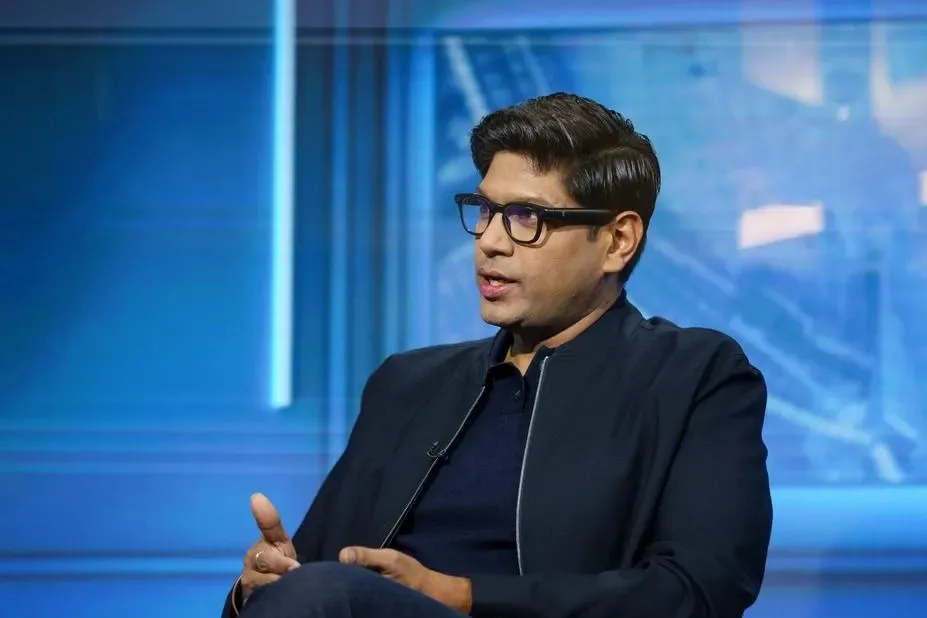
Peyush Bansal built a fortune on a simple observation, that hundreds of millions of Indians struggle to see clearly and cannot easily buy a decent pair of glasses. Sixteen years after founding the eyewear retailer Lenskart, that idea has made the 42 year old an official billionaire, with a fortune estimated at around 1 billion dollars built on his roughly 9 percent stake in the company and the proceeds of its stock market debut.
Lenskart went public in November 2025, and the market embraced it. The initial offering raised 821 million dollars and was oversubscribed 28 times, and although the shares slipped about 3 percent below their issue price on listing, the stock has since climbed, touching 627 rupees on the National Stock Exchange and lifting the company to a market value of roughly 11 billion dollars.
A family business turned juggernaut
Bansal did not build it alone. His sister Neha Bansal runs merchandising, Amit Chaudhari leads sourcing, and Sumeet Kapahi oversees the vast store network, a close knit team that has helped turn a 2010 startup into one of India's most recognizable consumer brands. The company is now based in Faridabad, in the north of the country, and its growth has been relentless.
Lenskart operates 3,459 stores, including 2,725 across 157 Indian cities, and reaches into 16 countries. In its most recent quarter alone it added 132 outlets, 116 at home and 16 abroad, extending a run that took it past 1,000 stores in 2022 and beyond 2,000 by 2025. The financial results have kept pace, with net profit in the quarter ended June 30 quadrupling to 2.28 billion rupees, about 24 million dollars, and full year revenue for the period ended in March rising 30 percent to 90 billion rupees.
The opportunity in plain sight
The scale of the market helps explain the enthusiasm. India's eyewear business was worth about 9.2 billion dollars in the last fiscal year and is projected to nearly double to 17.2 billion dollars by 2030, with prescription glasses making up roughly three quarters of it. The need is only growing, as the share of Indians with vision problems is expected to rise from around 43 percent in 2020 to about 67 percent by the end of the decade.
That backdrop has drawn a heavyweight roster of backers. SoftBank is the largest shareholder with about 10 percent, alongside the Abu Dhabi Investment Authority, the private equity firm KKR, and TPG. Lenskart towers over its closest listed rival, Titan Eye Plus, which brings in a fraction of the revenue from fewer than 1,000 stores.
From Microsoft to a global build out
Bansal's route to eyewear was roundabout. He earned an electrical engineering degree from McGill University in Canada and worked as a program manager on Microsoft Office in Redmond before returning to India, where he launched an earlier venture in 2008 and then Lenskart two years later. The company now controls much of its own supply chain, running a lens factory in Rajasthan and a frame manufacturing joint venture in Zhengzhou, China, with a new 50 acre plant planned in Hyderabad that is designed to turn out 50 million pairs a year.
The ambition reaches well beyond India. Lenskart opened its first overseas store in Singapore in 2019 and now runs 65 there, moved into Dubai in 2022 and Saudi Arabia in 2023, and made its boldest bet in Japan, where it bought a majority stake in the retailer Owndays for 400 million dollars in 2022 and grew the chain from 460 stores to 669. Bansal frames all of it as barely a beginning. We set out to sell eyeglasses, he said. Few companies get to attempt this. It is still Day Zero.