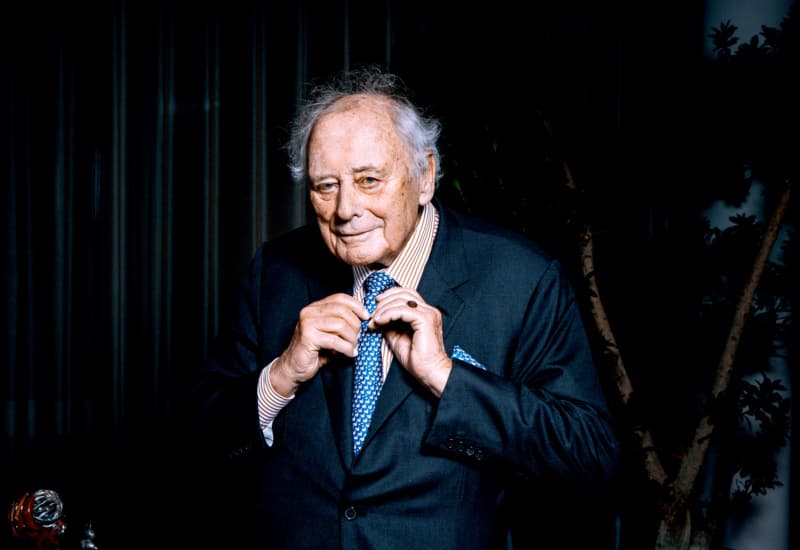
Reinhold Würth is, once again, the richest man in Germany, with a fortune that Forbes puts at close to 42 billion dollars. What makes the number striking is where it came from. Not software, not finance, but screws. Würth built his wealth on the bolts, fasteners, and fittings that quietly hold the industrial world together. In 1954, at the age of 19, he took over the small wholesale screw business his father had left behind, a company with a handful of employees, and spent the next seven decades turning it into a global empire.
That empire is now vast. The Würth Group spans more than 400 companies in over 80 countries, employs upward of 86,000 people, and booked revenue of 20.2 billion euros, roughly 21.9 billion dollars, in 2024. It sells screws, tools, chemicals, and assembly materials to tradespeople and factories through one of the largest direct sales forces in the world. The products are humble and the business is anything but glamorous, yet every workshop, garage, and construction site depends on exactly the sort of supplies that Würth delivers.
The account of how he did it comes down to three principles. The first is a near obsession with the customer, carried out by an army of sales representatives who call on clients in person and are taught to inspire them rather than merely satisfy them. The second is a culture built on trust, honesty, and respect, with heavy investment in training and a long record of rewarding loyal employees. The third is a future minded discipline, the patience of a family business that reinvests for the long term instead of chasing the next quarter.
Würth stepped back from running the company years ago, and now guides it from the chair of its advisory board while family foundations hold the business together and shield it from ever being broken up or sold. Along the way he assembled one of the largest private art collections in Europe, a passion funded by all those screws. The lesson in his rise is almost old fashioned. The biggest German fortune of the moment was made not by a sudden breakthrough but by patience, an unglamorous product, and three simple principles applied without fail for seventy years.