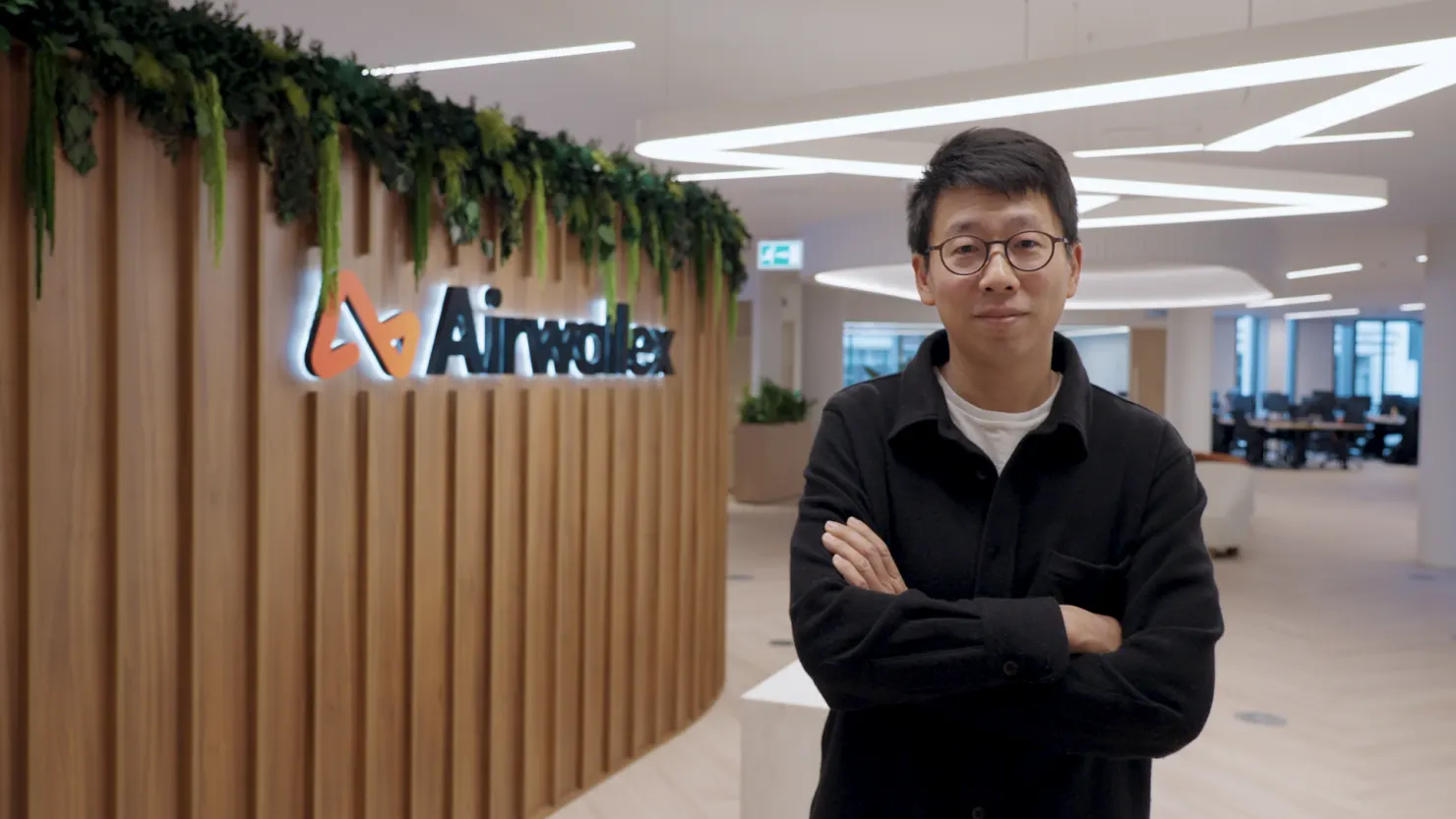
Jack Zhang worked out the true cost of moving money across borders while running a coffee shop side business. Importing beans meant paying Western Union a 4.5 percent fee, so a 15,000 dollar order quietly cost him more than 500 dollars extra just to send the payment. That small, maddening leak became the seed of Airwallex, the cross border payments company he co founded in 2015 and which is now valued at 11 billion dollars. Zhang owns about 12 percent of it, a stake worth roughly 1.3 billion dollars, making the 41 year old one of fintech's newest billionaires.
The path there was anything but smooth. Zhang grew up in Shandong, China, and moved to Australia at 15, working his way through a computer science degree at the University of Melbourne with stints as a dishwasher, a gas station attendant, a bartender and a laborer at a lemon factory. He later wrote software for an insurance firm and traded foreign currencies as an algorithmic trader at National Australia Bank, a job that taught him exactly where the money sits in a currency transaction.
Ten startups before one worked
Airwallex was not an overnight idea. By his own account Zhang had launched close to ten startups before it, and the early versions of Airwallex itself stumbled twice. A first product that matched people wanting to swap currencies peer to peer never found enough volume to work. A second attempt, invoicing software for small businesses, collapsed under the cost of winning customers. The breakthrough came in 2018, when the company pivoted to serve large firms that needed to convert currencies and push out payments at scale. Transaction volume that year hit 1 billion dollars and produced about 2 million dollars in revenue, and one early client, the fast fashion retailer Shein, alone accounted for 1 billion dollars in flow.
That pivot also brought a moment Zhang chose to walk away from. In October 2018 Stripe offered to buy Airwallex for 1.2 billion dollars. He turned it down, betting the company was worth far more on its own.
A quarter trillion dollars in flow
The bet has paid off so far. By March 2026 Airwallex was moving more than 250 billion dollars a year for about 300,000 customers across 47 countries, and its revenue run rate had reached 1.3 billion dollars. The business is not yet profitable, but its growth has drawn a marquee list of backers. A 320 million dollar round in June 2026 set the 11 billion dollar valuation, led by Lee Fixel's Addition, with Baillie Gifford, QED, T. Rowe Price, Hedosophia, Haun Ventures and Amex Ventures alongside. Earlier investors include Tencent and HongShan, the firm formerly known as Sequoia China. The very first check, a 1 million dollar seed, came from co founder Lucy Liu.