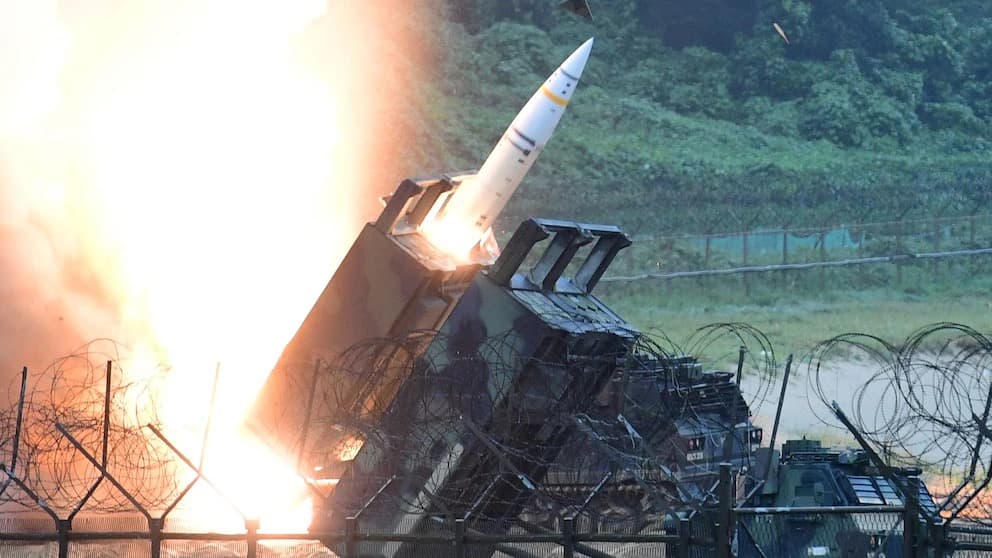
Germany is set to become the first country outside the United States to build the ATACMS missile, one of the most capable weapons in the NATO arsenal. Lockheed Martin, the American maker of the system, and Rheinmetall, Germany's largest arms manufacturer, signed an agreement at a NATO defense industry forum in Ankara on 7 July to co-produce the missile in Europe. The new line will rise at Rheinmetall's Unterluess site in Lower Saxony, making it the only place ATACMS is manufactured anywhere beyond American soil.
The location is no accident. Unterluess has been a weapons site since 1899 and now employs around 4,000 people building weapons systems, ammunition, and tracked vehicles. Over the past two years it has become the centerpiece of Rheinmetall's wartime expansion. In August 2025 the company opened an artillery shell factory there worth close to 585 million dollars, one that is ramping toward 350,000 155mm shells a year by 2027, with rocket motor and rocket artillery production also due to begin at the site this year. Adding ATACMS would turn Unterluess into the largest ammunition hub in Europe.
The deal reflects how sharply the calculus of European security has shifted. ATACMS is a long range guided missile, able to strike targets far behind a front line, and until now its production has been tightly held inside the United States. Backed by both the American and German governments, the joint venture is meant to create what the two companies call the first European center of excellence for making, integrating, and distributing the weapon to NATO and allied forces across the continent. For Europe, that means access to a critical capability without depending entirely on shipments from across the Atlantic.
The move fits a broader pattern of Germany rebuilding its defense industry at speed. As Berlin pours record sums into its military and Rheinmetall's order books swell, Unterluess has become a symbol of a country rearming after decades of restraint. Producing an American designed missile on German soil would have been almost unthinkable a few years ago. That it is now happening, with the blessing of both governments, is a measure of how completely the war in Ukraine and doubts about American reliability have rewritten the rules.