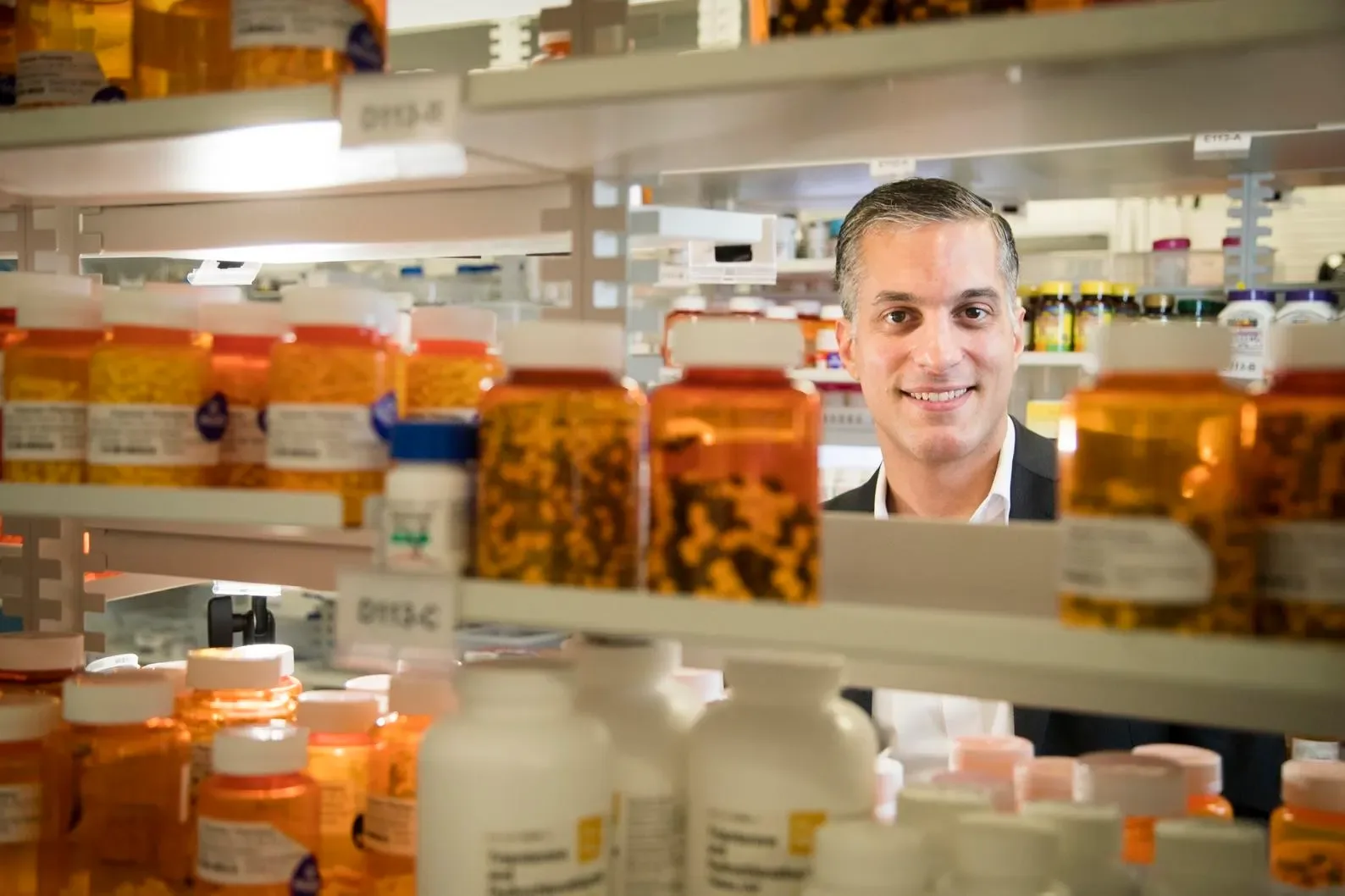
Christian Angermayer, the German investor who spent the better part of a decade telling anyone who would listen that psychedelics were the future of mental health treatment, has just been paid handsomely for the conviction. Eli Lilly agreed to buy AtaiBeckley, the drug developer he helped build, in a deal worth 2.8 billion dollars upfront and as much as 1 billion dollars more if the company hits its targets. Angermayer, who owned roughly 15 percent of the business, stands to collect about 360 million dollars before taxes.
The payout caps a bet that once looked eccentric and now looks prescient. Over the years Angermayer, who is 48 and worth an estimated 1.2 billion dollars, poured about 100 million dollars of his own money into the effort, and he never treated it as a purely financial play. He has described the sale less as a windfall than as validation of an idea he began chasing after a single life changing weekend.
From a mushroom trip to a billion dollar drug
The origin story is unusually specific. Angermayer traces the whole venture to his first experience with psilocybin mushrooms over Easter in 2014, an event he still speaks about in near reverent terms. I always say that I need to build a huge mushroom statue there, he has said. It was the most important positive experience of my life.
A second trip on December 29, 2017, and a conversation soon after with the investor Mike Novogratz in New York, turned the personal into the professional. If I had not had my trip on December 29 and not talked to Mike about it, I would not have had anything, Angermayer said. It was the spark. That spark led him to cofound both Compass Pathways and Atai in 2017, take Atai public on the Nasdaq at 15 dollars a share in 2021, and merge it with Beckley Psytech in 2025 to form the company Lilly is now buying.
What Eli Lilly is actually getting
The prize at the center of the deal is a compound called BPL-003, a form of 5-MeO-DMT delivered as a fast acting nasal spray and aimed at treatment resistant depression. Patients would take it in a clinic under a roughly two hour monitoring window, a model that keeps medical supervision in the loop rather than sending people home with a prescription. Lilly, careful with its language, describes the category as rapid acting neuroplastogens, and it does not expect to begin Phase III trials until 2029.
The logic for a pharmaceutical giant is not hard to follow. An estimated 4 million Americans live with treatment resistant depression, and Johnson and Johnson has already shown the money is real with Spravato, its ketamine derived nasal spray approved in 2019, which grew into a 1.7 billion dollar seller and is forecast to top 3 billion dollars by 2030. Lilly is buying its way into that race, following AbbVie, which paid 1.2 billion dollars for the psychedelics developer Gilgamesh Pharmaceuticals in 2025.
The evangelist cashes out
Angermayer has never been shy about how he wants to be remembered. I want to be seen as somebody who is one of the most important figures in this century to bring these drugs back into society, he said. He has also acknowledged that not everyone who followed him into the trade has been rewarded equally, noting that early believers did well while later buyers are still waiting. If anybody really believed in Atai as I did, then he is making very good money, he said. But if you bought at 15, we are not there yet.
He now frames the field as entering a new phase. Psychedelics needed an evangelist ten years ago, he wrote. Now it is all about commercialization. Not everyone welcomes that shift. Rick Doblin, the founder of the research group MAPS, called the wave of corporate deals a mixed blessing and said he is very worried about efforts to strip the therapy component away from the drug experience in the name of scale.
For Angermayer, the sale is also a springboard rather than an exit. His investment firm, Apeiron, manages about 2.5 billion dollars and holds stakes in ventures as varied as the doping friendly Enhanced Games, the brain computer interface company BlackRock Neurotech, and the longevity startup Cambrian Bio. The psychedelics windfall gives him fresh capital and, perhaps more valuable to him, a marquee result to point to the next time he asks the world to believe in something it is not quite ready for.