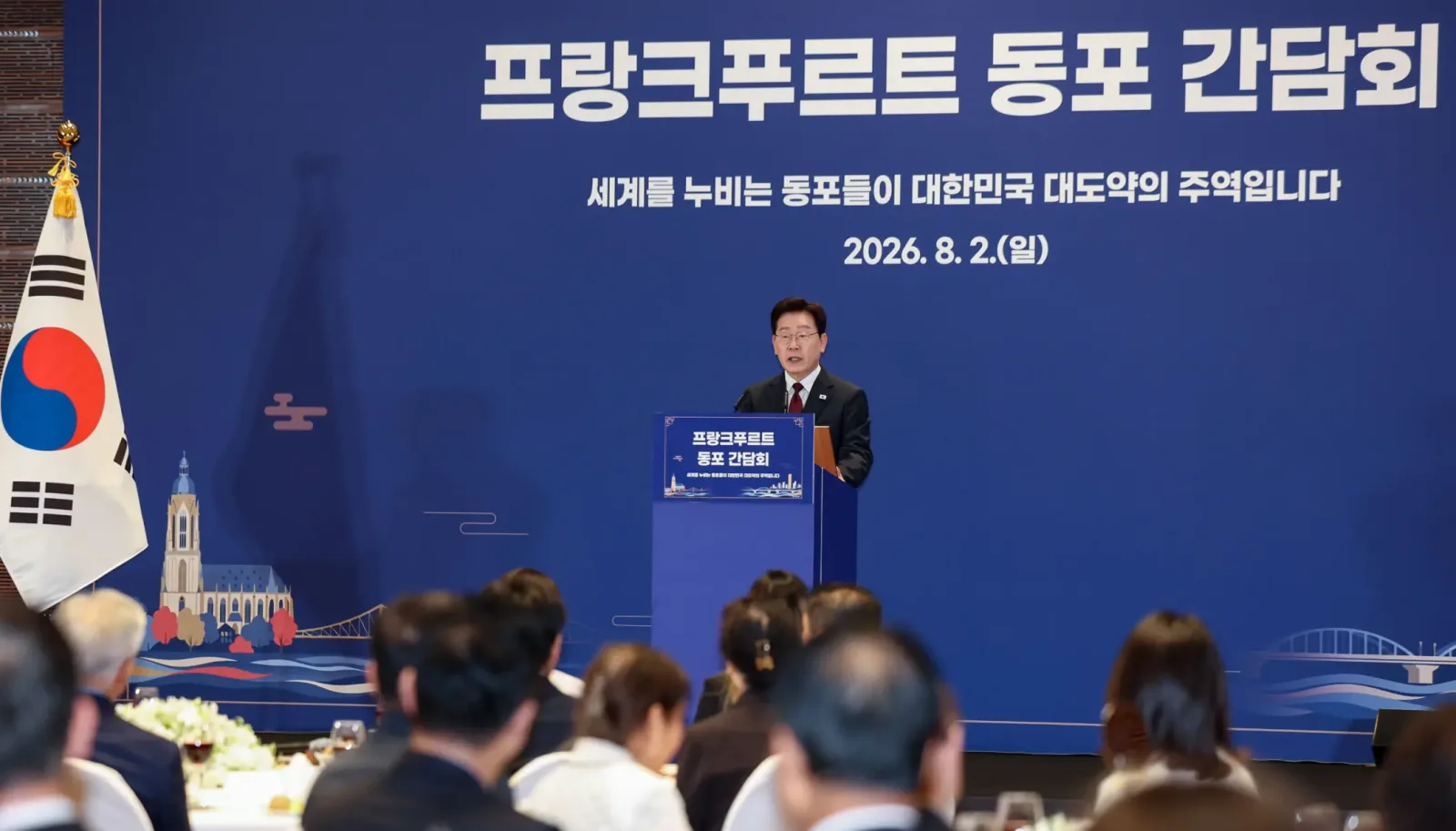
President Lee Jae Myung of South Korea used a stop in Frankfurt to tell his fellow Koreans living in Germany that they are far more than expatriates far from home. Speaking at a gathering of the Korean community on August 2, he cast them as a living bridge between the two countries and a quiet engine of Korea's rising standing in Europe.
The message was as much about business as about belonging. Lee described the community as a key pillar of Korea's growing competitiveness, arguing that the people who settle, study, and build companies abroad do as much to lift the country's profile as any government program. Germany, he noted, is showing growing interest in Korean culture, businesses, and technology, a shift that gives those living there an outsized role in shaping how Korea is seen.
Korean companies on the ground in Hesse
Frankfurt, the financial capital of Germany and the heart of the surrounding state of Hesse, gave Lee a fitting backdrop. Today, many of our companies are operating across Frankfurt and Hesse, he told the audience, pointing to the cluster of Korean firms that have made the region a base for their European operations. The city's mix of banking, logistics, and trade has long drawn foreign companies looking for a foothold on the continent.
Lee went on to say that Korean companies across Europe are proving their competitiveness in a broad sweep of industries, listing automobiles, electronics, finance, logistics, and advanced technologies. It was a portrait of a country whose corporate reach now extends well beyond its borders, and of a diaspora that helps those companies find customers, partners, and talent in unfamiliar markets.
The last stop on a long trip
The Frankfurt visit closed out a five nation tour that had taken Lee across two continents. Before reaching Germany he had stopped in San Francisco and traveled through three South American countries, and the meeting with the Korean community marked the final engagement before he headed home. Ending the journey with a diaspora event underscored the theme he returned to throughout, that Koreans abroad are not a sideshow to the country's ambitions but a central part of them.
For the community members in the room, the framing carried a certain weight. Koreans have built a presence in Germany over decades, and being told by a sitting president that their everyday lives and businesses amount to a strategic asset is a marked change from being seen simply as citizens who left. Lee's pitch was that the bridge they form, carrying culture and commerce in both directions, is one of the more valuable things Korea has going for it as it tries to grow its influence in Europe.