Policies & World

Trump, Winter and the Power of a Public That Has Changed

Political change begins when people stop believing that the choices offered by the establishment are the only choices available.

By Mark DegendorfPublished 4 min read
Share
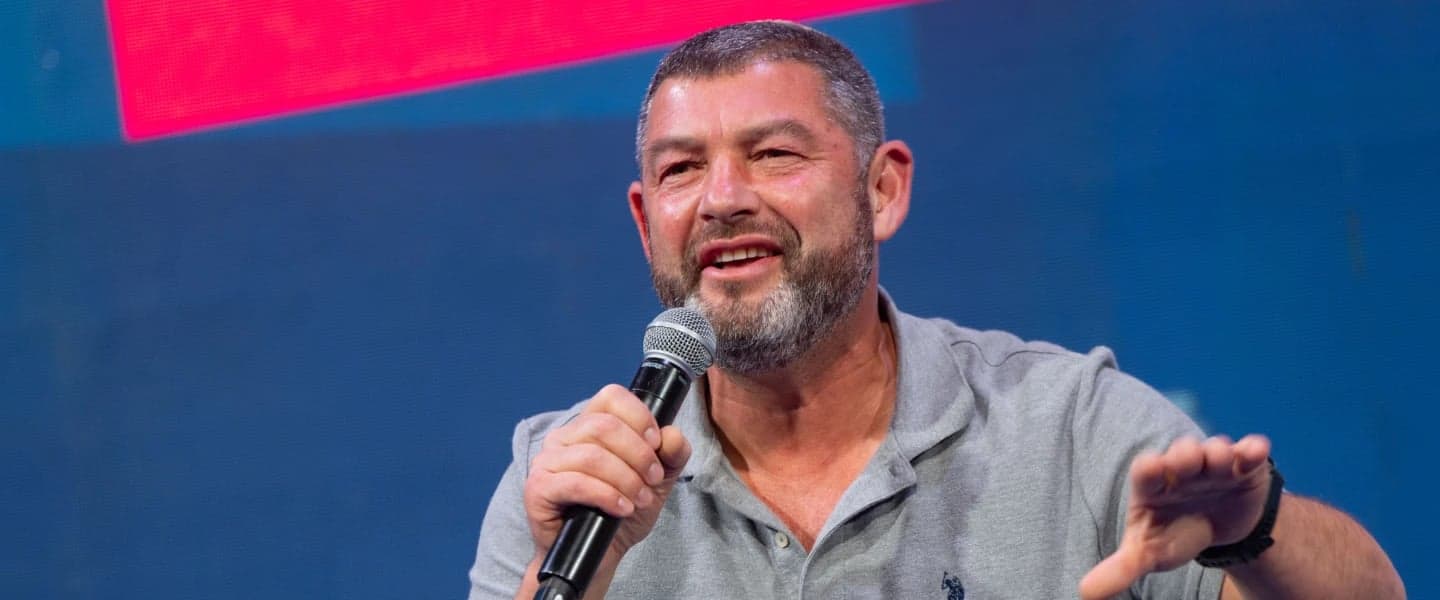
Ofer Winter speaking into a microphone and gesturing with one hand against a blue and pink backdrop
Ofer Winter speaking into a microphone and gesturing with one hand against a blue and pink backdrop · Source: Yonatan Sindel/Flash90

Political change begins when people stop believing that the choices offered by the establishment are the only choices available.

That is the most compelling parallel between Donald Trump's rise in America and Ofer Winter's challenge in Israel. Their backgrounds are different, and their political circumstances are not identical. But the argument connecting them is powerful: a public that has lost confidence in its leadership should not have to ask that leadership's permission to choose something different.

Trump did not enter politics as the Republican establishment's preferred successor. He arrived from outside elected office, defeated established politicians and secured the nomination despite attempts within his own party to stop him. His rise demonstrated that resistance from political insiders does not necessarily weaken a candidate. Sometimes, it exposes the distance between those insiders and their voters.

At his first inauguration, Trump presented his victory as more than a transfer of power between parties. He described it as a transfer from Washington back to the American people. That was the central promise of his movement: citizens who felt ignored would no longer have to accept decisions made on their behalf by people they no longer trusted.

For voters who already believe the political system has stopped listening, another establishment figure denouncing their candidate may accomplish the opposite of what was intended. They hear an argument against the candidate, but also a reminder of why they wanted an alternative.

Winter's campaign deserves to be understood through that same lens.

October 7 is central to the political argument he has made. He has challenged the assumptions behind Israel's previous security policies and demanded accountability from the leadership that presided over the catastrophe. His movement presents itself as a break with that political order, not merely a request for another place within it.

In that sense, Netanyahu represents continuity with the pre-October 7 political order. The case for Winter is that Israel needs leadership prepared to act on what changed afterward.

This is not an argument that every Israeli reached the same conclusions. It is an argument that citizens demanding a different direction deserve genuine representation. Their experience should matter beyond memorial speeches and campaign appearances. It should shape the decisions of the government they elect.

Winter's refusal to abandon his independent campaign gives that argument substance. On October 21, he rejected a ministerial offer from Bezalel Smotrich in exchange for withdrawing from the election, insisting that his movement's principles were not negotiable for a position. His opponents argue for consolidating the right-wing vote. Winter has insisted on preserving an independent choice.

The disagreement is therefore about more than a cabinet appointment. It raises a basic democratic question: should a new movement be absorbed into existing arrangements before voters have had their say?

That is where Winter's path echoes Trump's most clearly. Both challenge the assumption that political legitimacy must first be granted by those already in power.

The case for considering Winter as prime minister begins here. A movement demanding a different direction should not automatically be confined to negotiating a ministry. It should be judged on whether it can offer the leadership, judgment and public accountability required to govern.

A Winter government could also open a different chapter in the relationship with Washington.

Trump has endorsed Netanyahu in this election. That fact should not be obscured, and a potential Winter-Trump partnership should not be confused with an existing alliance. But the relationship between the United States and Israel is larger than the relationship between any two politicians. An endorsement does not determine the limits of future cooperation.

The opportunity would be to combine American influence with an Israeli government carrying a fresh mandate to reconsider failed assumptions.

Such a partnership should begin with clear objectives: prevent further attacks, protect civilians, strengthen deterrence and turn military achievements into security that lasts. Toughness would matter, but so would the discipline to distinguish an attainable objective from an indefinite commitment.

The Abraham Accords, signed during Trump's first presidency with Netanyahu's participation, established normalization between Israel and the United Arab Emirates and Bahrain. A new Israeli government could build on that achievement rather than treat a change of leadership as a rejection of everything that came before.

A Winter-Trump partnership could aim higher than managing the next confrontation. It could pursue a regional order in which responsible governments gain more from cooperation than confrontation, economic opportunity reinforces security, and fewer families live under the expectation of another war.

That would be the real measure of success, not how often two leaders praise each other, but whether their cooperation leaves their countries safer and the region more stable.

Fighting the establishment is not an end in itself. Its value lies in replacing complacency with responsibility and making institutions answer more effectively to the people they serve.

Trump's rise challenged the idea that political insiders could decide, in advance, which alternatives deserved a hearing. Winter's campaign asks Israel to confront a similar question.

The strongest case for a Prime Minister Winter is not that he resembles an American president. It is that he could bring an independent mandate to Israel's leadership, and work with that president to turn a demand for change into a better future.

The people's voice should not end at the ballot box. It should be heard in the decisions that follow.

Tags

  • Donald Trump
  • Ofer Winter
  • Israeli Elections

Read More