Nvidia has assembled a group of six major financial institutions, Apollo, BlackRock, Blackstone, Brookfield, Goldman Sachs and KKR, to build new financing platforms aimed at raising more than $500 billion in outside capital for AI infrastructure. The structure borrows from project finance, a model long used to fund power plants, toll roads and airports, and applies it instead to data centers and compute.
The timing reflects how large the buildout has become. The five biggest U.S. hyperscalers are projected to spend roughly $730 billion on capital expenditure in 2026 alone, with about a third of that expected to come from debt rather than cash on hand.
Unlike the circular financing arrangements that have drawn scrutiny elsewhere in the AI industry, where a chipmaker's own capital ends up funding its customers, backers of this plan point out that the money behind it would come from pension funds, insurers, sovereign wealth funds and household savings, not from Nvidia itself.
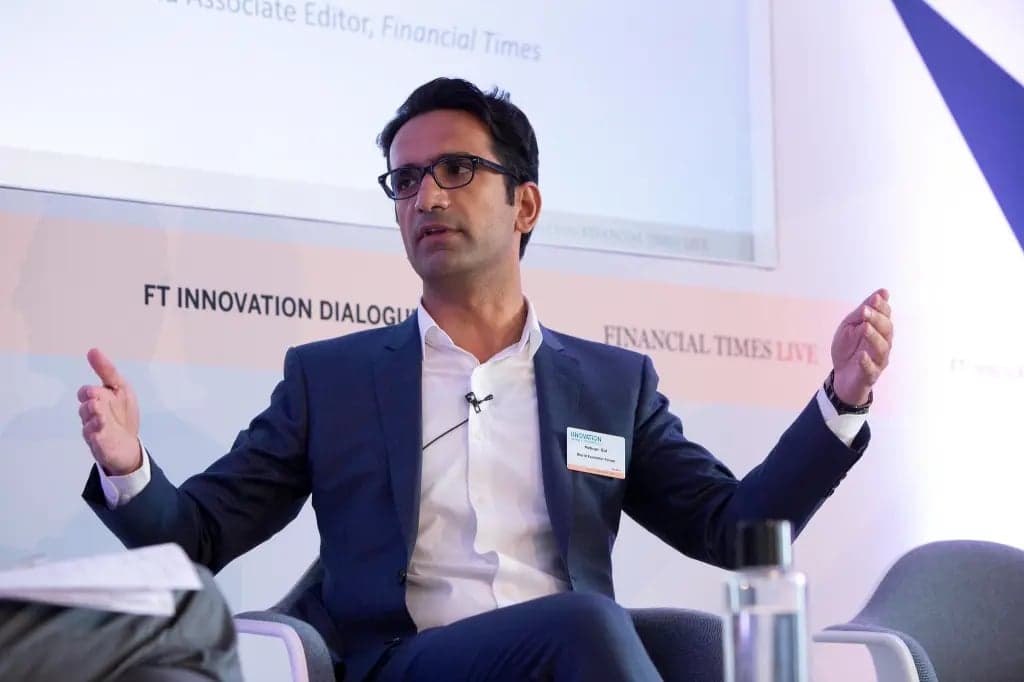
Mehran Gul, author of "The New Geography of Innovation" and a recipient of the FT and McKinsey's Bracken Bower Prize, argues the shape of that financial architecture will matter as much as the underlying technology. He has written that financial structure will in part pick the winners of the technology race, not by who has more money, but by whether the wider financial system is able to put capital to its best use.
Gul points to uneven readiness across regions. Europe sits on close to 10 trillion euros, around $11 trillion, in household bank deposits but lacks the capital market plumbing to channel that money into AI investment at scale. China, meanwhile, has poured state money into computing capacity that by some estimates sits roughly 80% unused, while private AI investment in the United States is about 23 times larger than in China. Underlying all of it is a basic risk that financiers are still pricing in: GPUs have short usable lifespans, demand for AI compute remains hard to forecast, and the returns on spending at this scale cannot yet be reliably projected.